How fast can you deploy sanitation after an emergency?
Disasters do not wait for a normal delivery window, so we do not run one. Call Renton Porta Pros and we start routing a truck the same day for emergency porta potty rental, pulling from standard units already staged for quick turnaround. A standard porta potty rental has a 60 to 70 gallon holding tank and stands about 92 inches tall, so it handles heavy shelter traffic without a same-day service call. If your event is a coordinated shelter response rather than a single site, our construction site services team can also stand up a full sanitation footprint: toilets, handwashing station rental, and a temporary fence rental perimeter if the site needs crowd or access control. Water service matters here too. OSHA 1926.51(a)(1) requires an adequate supply of potable water at any workplace, and that same logic drives what we bring to a disaster site: paired toilets and wash stations, not toilets alone. If displaced residents need longer-term facilities, ask about a portable restroom rental plan sized for a week or a month rather than a single weekend. We also carry storage container rental units for staging donated supplies, and a mobile office trailer rental works as a command post for coordinators running the response from Renton.
What sanitation do shelters and relief sites actually need?
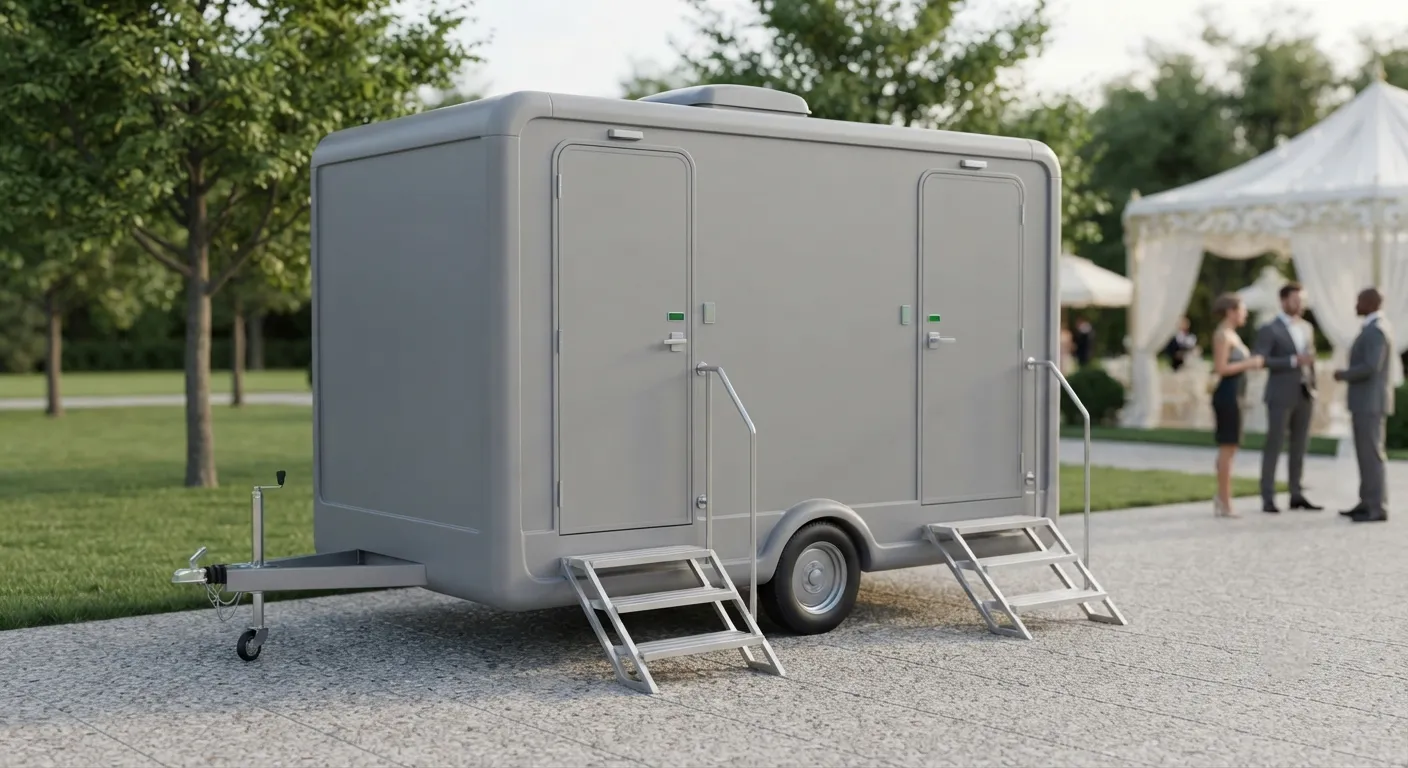
A shelter needs toilets, handwashing and, if capacity is large, an accessible unit, and the ratio depends on headcount. OSHA 1926.51(c)(1) sets construction-site toilet ratios at one facility per 20 workers or fewer, one toilet seat and one urinal per 40 workers from 20 up, and one seat and one urinal per 50 workers once you pass 200. Emergency shelters are not construction sites, but the same math is a reasonable planning floor, and our how many porta potties do i need guide walks through the count for your headcount. Every cluster of single-user portable units should include an accessible unit under ADA Standards section 213.2, which requires at least 5 percent of a cluster to be accessible, never fewer than one. Our ada accessible porta potty units meet the 36 inch clear route width called for in ADA Standards section 403.5.1 and the 60 inch turning circle in section 304.3.1, both of which matter when responders are moving people through a site fast. Handwashing is separate from toilets. 29 CFR 1910.141(d)(2) requires soap and towels or a hand-drying device at wash stations, and hand sanitizer alone does not satisfy it, so we pair every restroom cluster with a proper portable sink rental or hand sanitizer station rental as a supplement, not a substitute. For a larger shelter, a 4 stall restroom trailer or 8 stall restroom trailer covers more people per unit than single toilets, and a shower trailer rental matters for anyone sheltering longer than a few days.
What does emergency sanitation cost during a disaster response?
Pricing during an emergency response tracks standard rental bands, not disaster surcharges, because the units themselves do not change. A day rate buys flexibility when you do not know the response timeline yet; a week or month rate makes sense once a shelter is established.
| unit | day | week | month |
|---|---|---|---|
| standard | $100 - $350 | $130 - $500 | $125 - $325 |
| ada | $200 - $400 | not listed | not listed |
| deluxe | $85 - $1,200 | $150 - $290 | not listed |
Delivery adds a separate fee, typically $100 to $500 for a day call and $50 to $150 for a week-long placement, and that fee covers getting a truck onto a site that may have debris, downed lines or limited access. See porta potty rental cost and monthly porta potty rental for the full breakdown, or request a quote with your headcount and duration and we will size it. If flooding has taken out a septic system entirely, our septic pumping service and holding tank rental options keep a household or facility functional until repairs happen, and emergency septic service covers the pump-out call itself.
Frequently asked questions
How many portable toilets does a shelter of 100 people need?
Using the OSHA 1926.51(c)(1) ratio as a planning guide, 100 people falls in the 20-to-40-workers-per-fixture band, meaning roughly three toilet seats plus urinals. Shelters skew toward more frequent use than a jobsite, so we usually round up. Ask us to walk through your exact headcount before ordering.
Can you deliver to a site with debris or limited road access?
Often, yes. Roll-off and trailer deliveries need about 60 feet of straight clearance behind the truck, so tell us what the access looks like before we dispatch. If a route is blocked, we will find the closest workable staging point in Renton and go from there.
Do you provide handwashing separately from toilets?
Yes, and we recommend it even when a shelter thinks toilets alone will cover them. A proper wash station with soap and towels meets 29 CFR 1910.141(d)(2); hand sanitizer stations are a good supplement but not a substitute for that standard.
How quickly can units be swapped if a site location changes?
Relief sites move, and we plan for that. Call ahead and we will reroute delivery or pickup, since our zone already covers Renton and towns like Burien 8.7 miles west without a long lead time.
What if we need showers, not just toilets?
For multi-day sheltering, a shower trailer is worth the upgrade over toilets alone. Check restroom trailer rental or go straight to shower trailer rental for units built for that duration.
Next step
Get a delivery date
Tell us the address, the dates and the headcount. We size the order and confirm the route.