Do porta potties smell if they are serviced on time?
No, not much. Smell is almost always a service-interval problem, not a design flaw. The industry baseline under ANSI/PSAI Z4.3 is one visit per week for up to 10 users across a 40 hour week, and that interval is built around keeping waste well below the rim of a standard tank. Push past that ratio, whether it is more workers on a Renton job site or a longer event day, and odor creeps in faster than the schedule accounts for. If you are not sure how many units your crew needs, our guide on how many porta potties you need walks through the math. Chemical deodorizers in the tank also matter. They break down waste and knock back the ammonia smell that builds in standing liquid, which is why a standard porta potty rental that gets serviced weekly holds up fine through a full month on site.
Why do some units smell worse than others?
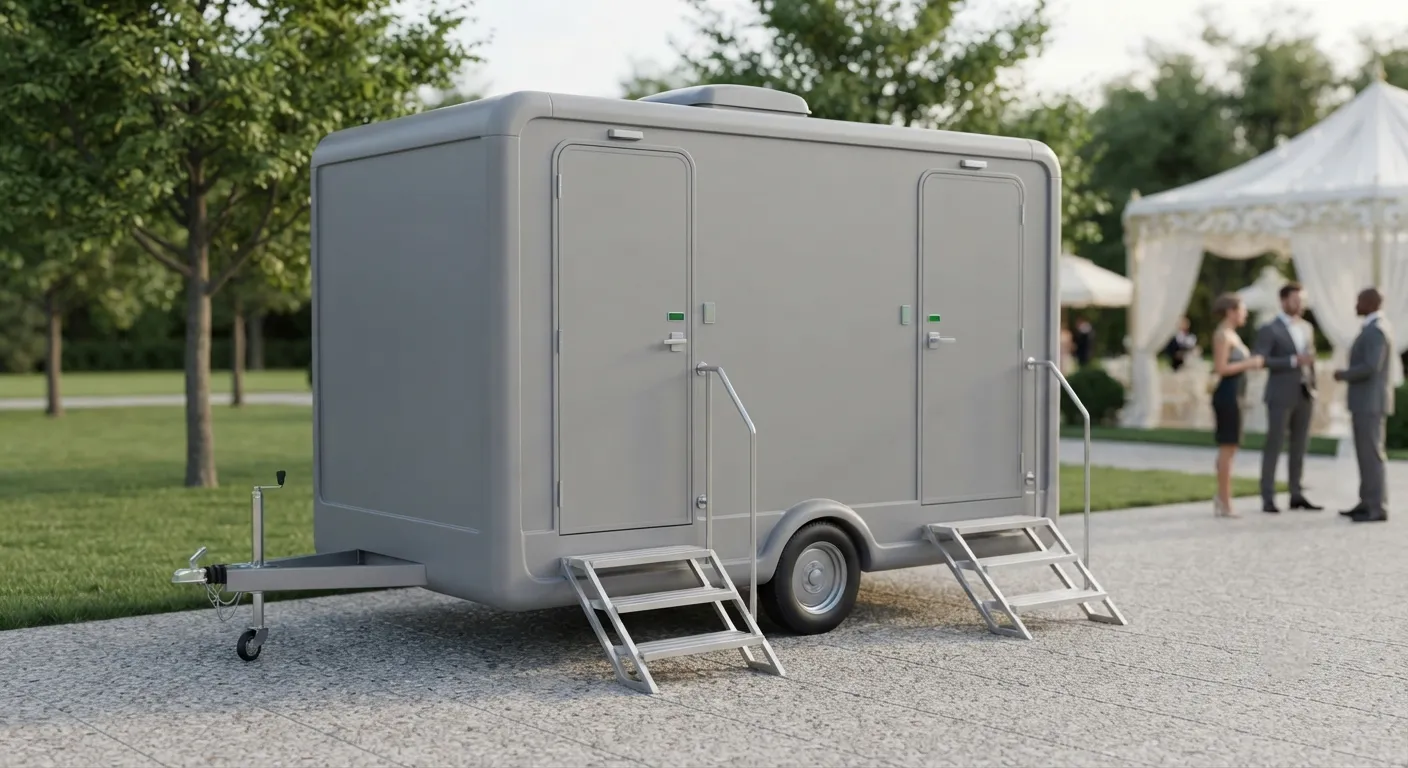
Placement, heat and unit type all play a part. A unit parked in direct sun bakes through the afternoon and off-gasses faster, so shade and airflow matter as much as the pump schedule. Our porta potty placement guide covers where to put units so they stay cooler and easier to reach for service trucks. Temperature swings hit Renton crews differently by season too; check porta potty in winter for how cold weather actually slows odor down rather than making it worse. Unit type matters as well. A deluxe flushable porta potty uses a flush mechanism that rinses the bowl after each use, which cuts down on the surface odor a standard unit can build up between services. An ADA accessible porta potty is sized larger inside, per ADA Standards 304.3.1 calling for a 60 inch turning circle, and that extra air volume also helps dilute odor compared to a tighter standard footprint.
How often are porta potties cleaned to control smell?
Weekly is the baseline, but job sites and events often need more. A construction crew running full days near downtown Renton will fill tanks faster than a weekend gathering, so service frequency should scale with headcount, not just calendar days. OSHA 1926.51(c)(1) sets toilet counts by crew size on construction sites, from one unit for 20 workers or fewer up to one toilet seat and one urinal per 40 workers as headcount climbs, and higher headcounts mean faster fill rates and a shorter comfortable window between pump-outs. Event organizers can lean on the same logic. A festival restroom rental or wedding restroom rental with steady foot traffic all day needs the same attention to interval as a job site with a full crew. Renters comparing timeframes should look at porta potty rental per day pricing against a monthly porta potty rental commitment, since service frequency stays the same either way; only the swap-out and pickup schedule around it changes.
Are restroom trailers less smelly than standard units?
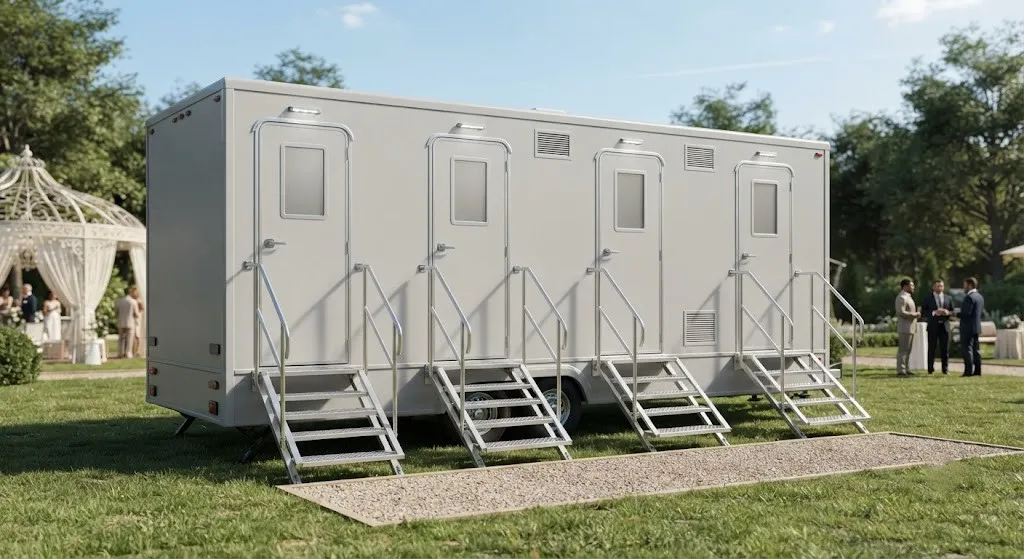
Generally yes, because they run water and better ventilation. A restroom trailer rental uses a flush system tied to a fresh water supply, so waste does not sit exposed to open air the way it can in a poorly vented standard unit. Trailers also carry separate holding tanks for fresh and waste water, keeping the two apart instead of mixing at the bowl. For events expecting steady traffic, a 4 stall restroom trailer or 8 stall restroom trailer spreads that traffic across more fixtures, which slows how fast any single tank fills. Handwashing matters here too. 29 CFR 1910.141(d)(2) requires soap and a towel or drying device at wash stations, since hand sanitizer alone does not meet that standard, and a handwashing station rental placed next to your units keeps hands clean without adding odor load to the toilet itself. Crews working with paints, coatings or similar contaminants fall under a different rule, OSHA 1926.51(f)(1), which is worth checking against your specific job.
| unit | day | week | month |
|---|---|---|---|
| standard | $150 | $200 | $200 |
| deluxe | $250 | $290 | -- |
| ada | $200 | $230 | -- |
Renton sits close enough to several other service areas that swapping unit types or adding trailers on short notice is straightforward; Tukwila is 6.3 miles west and SeaTac is 8.0 miles southwest, both within easy same-day delivery range. Burien runs 8.7 miles west, and crews working farther out toward Issaquah, 14.0 miles northeast, or Sammamish, 18.6 miles northeast, still fall within a normal delivery window. Check service areas for the full list. If a unit on your Renton site starts smelling badly between scheduled visits, that usually means it is time for emergency porta potty rental support or an unscheduled pump-out rather than a sign the unit itself is faulty.
Frequently asked questions
Why does my porta potty smell worse in hot weather?
Heat speeds up decomposition inside the tank, which releases odor faster than in cooler months. Shade placement helps, and a shorter interval between services during a Renton heat wave keeps smell down. Ask about adding a mid-week service if your rental runs through summer.
Does the blue liquid in porta potties stop the smell?
Yes, mostly. That deodorizer breaks down waste and neutralizes ammonia, which is the main smell source in a standing tank. It works best when the tank has not been overfilled, so keeping to a normal service interval matters more than the chemical alone.
Can I request more frequent cleaning if odor is a problem?
Yes. Service frequency is flexible beyond the weekly baseline, especially for high-traffic construction sites or multi-day events. Ask Renton Porta Pros about adding mid-rental services if your crew count or attendance runs higher than expected.
Do flushable units really smell less than standard ones?
Yes. A flush mechanism rinses the bowl after each use instead of letting waste sit exposed, which is why deluxe flushable units generally hold up better over a multi-day rental than a standard unit under the same traffic.
Is it normal for a brand new unit to have a slight smell?
A faint chemical scent from the deodorizer is normal at delivery. That is different from a waste odor. If a new unit smells strongly right after setup, call for a placement check or service adjustment.
Next step
Get a delivery date
Tell us the address, the dates and the headcount. We size the order and confirm the route.