How Does a Standard Porta Potty Actually Work?
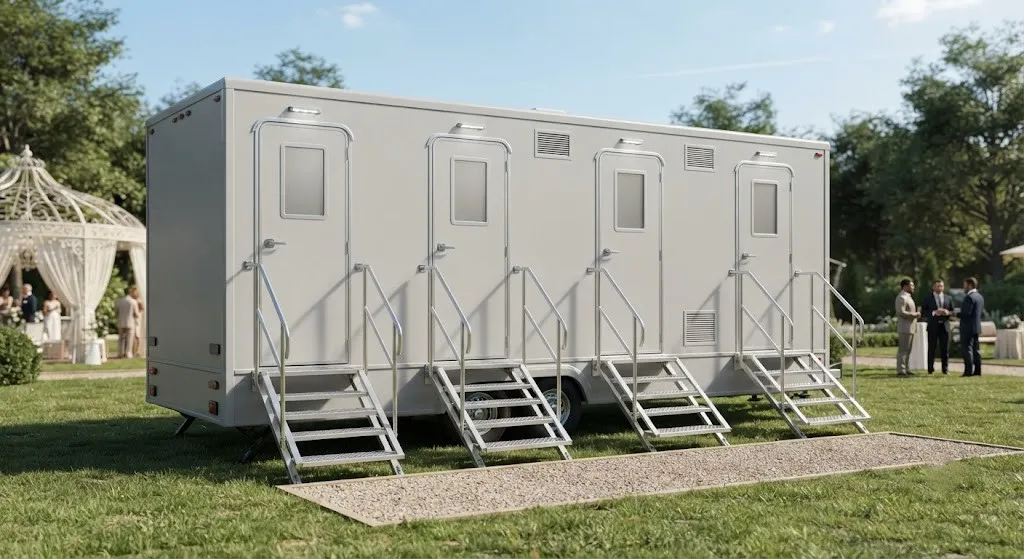
There's no flush handle because there's no flush. A standard unit sits about 44 by 48 inches on the ground and stands roughly 92 inches tall, with a holding tank of 60 to 70 gallons underneath the seat. Waste drops straight into that tank, where a blue chemical solution breaks down solids and knocks back odor between services. When the truck comes, a technician pumps the tank, rinses it, and refills the chemical charge. That's the whole cycle. If you've ever wondered how do porta potties work on a construction site with dozens of workers using one unit a day, the answer is volume math: OSHA 1926.51(c) sets the ratio at one toilet for 20 workers or fewer, scaling up as crew size grows. Renton contractors sizing a job site should check our how many porta potties do I need guide before ordering, since under-ordering means a construction worker running to the porta-potty across a job site every break. For most jobs, a standard porta potty rental covers it without upgrading to anything fancier.
How Do Flushable Porta Potties Work?
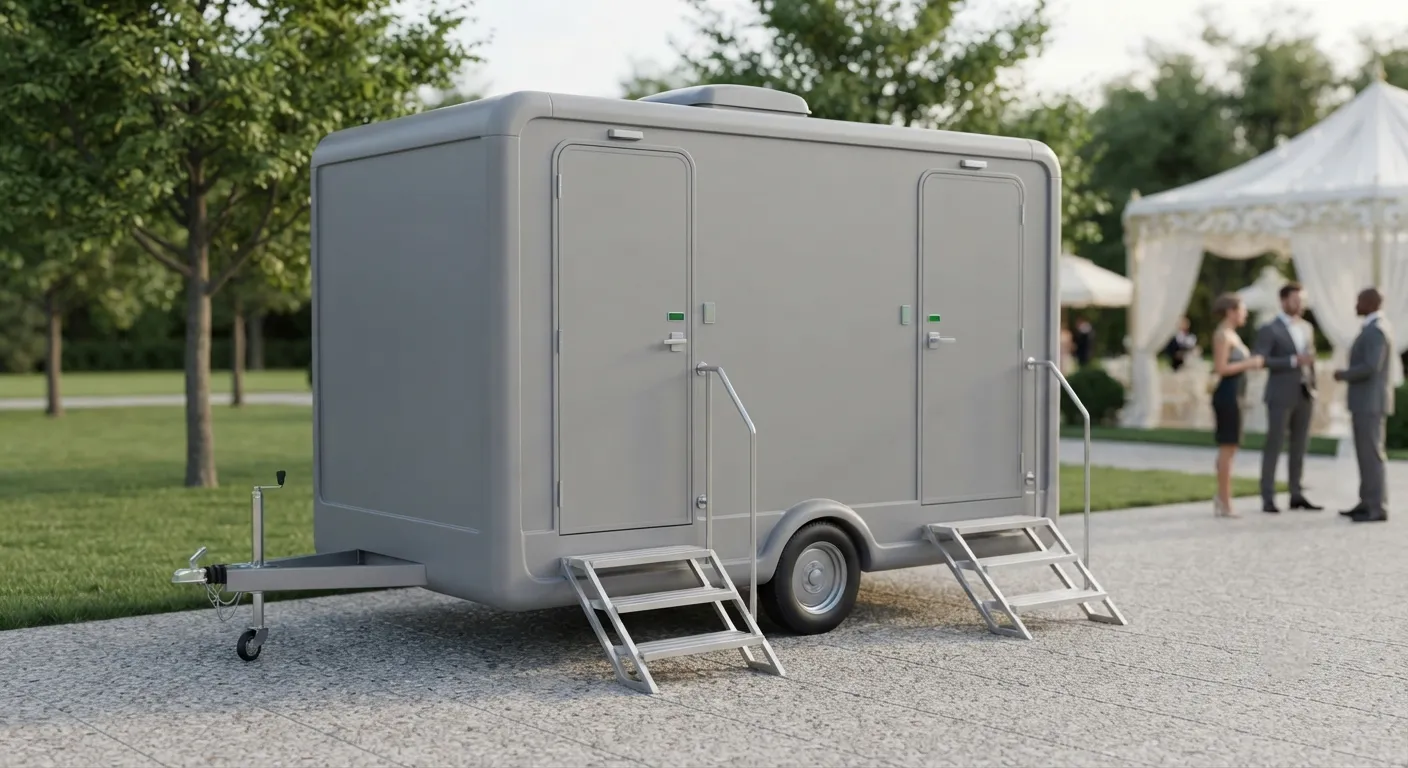
A deluxe or flushable unit adds a small onboard freshwater tank and a hand-pump or foot-pedal flush that pushes water through the bowl into the same holding tank below. It feels closer to a home bathroom because it partly is one. These units often include a sink basin fed by that same freshwater reservoir, plus a separate greywater tank to catch sink runoff. That's also how a portable sink works on job sites and at events: a fresh tank on top, a catch tank on the bottom, no pipes running anywhere. Our deluxe flushable porta potty page breaks down what's included, and if you need actual handwashing infrastructure rather than a built-in sink, a standalone handwashing station rental or portable sink rental satisfies that separately. Under 29 CFR 1910.141(d)(2), washing facilities need soap and towels or a hand-drying device. Hand sanitizer alone doesn't meet that standard, which matters for any Renton employer trying to stay compliant with general industry sanitation rules.
What Chemicals Go in a Porta Potty?
The blue liquid in the tank is a deodorizing, waste-digesting chemical blend, and it's the reason a serviced unit doesn't reek by day three. People searching portable toilet chemicals near me are usually trying to buy their own for a camping unit or private outhouse, but on rented equipment, Renton Porta Pros handles the chemical charge as part of every service visit. The industry baseline under ANSI/PSAI Z4.3 calls for one service visit per week for up to 10 users across a 40 hour week, though busy events or full crews need more frequent pumping. Septic tank cleaning chemicals are a different product entirely, meant for a home's underground tank rather than a portable unit, and misusing one in place of the other can cause real problems. If you're maintaining a house septic system rather than renting toilets, our septic pumping service and how often to pump a septic tank pages cover that separately, since a typical residential tank needs pumping every 3 to 5 years depending on tank size and household load.
How Do Camping Porta Potties Work?
A camping-style portable toilet works on the same holding-tank principle as a job site unit, just smaller and often self-contained for one or two users rather than a crew. Some are the same 44 by 48 inch footprint units used on construction sites, just placed at a campground or private property instead of a work zone. Others are compact cassette-style toilets, which aren't something Renton Porta Pros rents but which follow the identical logic: waste and chemical solution collect in a sealed tank, then get dumped and rinsed. For group camping, family reunions, or rural property without plumbing, a camping porta potty from a rental company beats a small personal unit because it's serviced on-site instead of requiring you to haul and dump it yourself. Placement matters too. Units need stable, level ground, similar to the firm and slip-resistant surface standard under ADA Standards section 302.1, and our porta potty placement guide covers where units should and shouldn't go on uneven Renton terrain.
Frequently asked questions
Do porta potties smell if serviced regularly?
Not much. A unit pumped and re-charged with deodorizing chemical on schedule stays close to odor-free between visits. Smell complaints usually trace back to a skipped service date, high heat, or overuse beyond the tank's capacity. See do porta potties smell for more on what drives odor and how service frequency fixes it.
How often are porta potties cleaned on a job site?
Baseline service runs about once a week for lighter use, per the ANSI/PSAI Z4.3 industry standard, but busy construction crews or events need two or more visits weekly. Renton Porta Pros sets the schedule based on worker count and site conditions. Full details live on how often are porta potties cleaned.
What is a porta potty rental cost in Renton?
Standard unit rental runs from about 100 dollars a day up to 350 for premium placement, with weekly and monthly rates dropping the per-day cost. See the porta potty rental cost and monthly porta potty rental pages for full pricing breakdowns by duration.
Can a porta potty be ADA accessible?
Yes. ADA accessible units include a wider door opening, meeting the 32 inch minimum clear width under ADA Standards section 404.2.3, and interior space for a 60 inch turning circle per section 304.3.1. Clustered units require at least 5 percent accessible under section 213.2. Details are on ADA accessible porta potty.
How far will Renton Porta Pros deliver a unit?
Delivery covers Renton and nearby cities including Tukwila, 6.3 miles west, and SeaTac, 8.0 miles southwest. Delivery fees vary by distance and rental length. Confirm your address and timeline through request a quote or check service areas for full coverage.
Next step
Get a delivery date
Tell us the address, the dates and the headcount. We size the order and confirm the route.